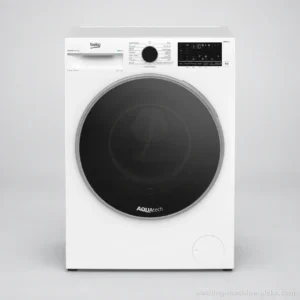
Beko B3WFT51243W
Key strength: washing capacity, rated 9.3/10.
Read the review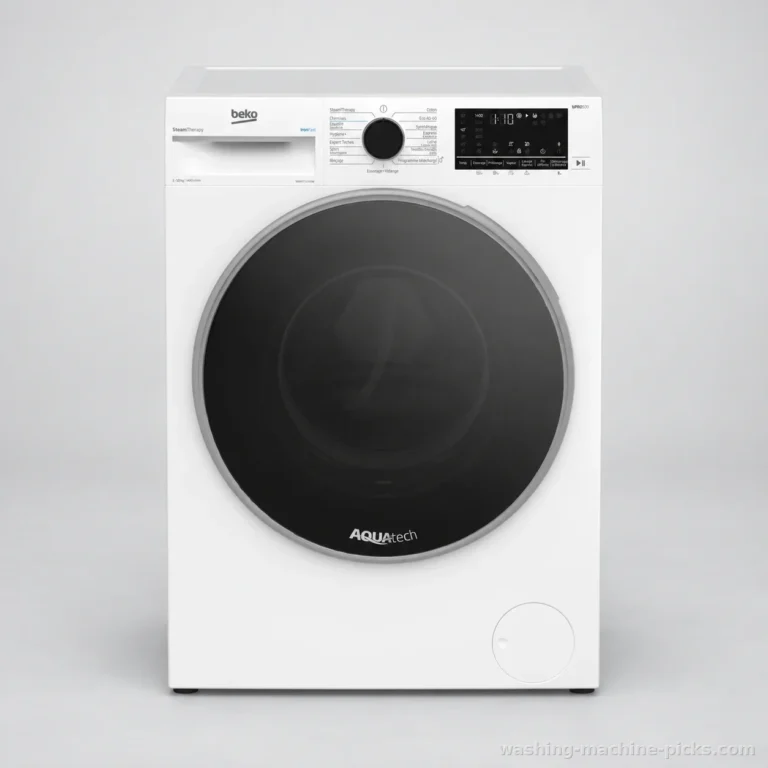 Our rankingsThe best washing machines24 washing machines
By installation
By color
By features
Features and options
By brand
Our guides to choosing
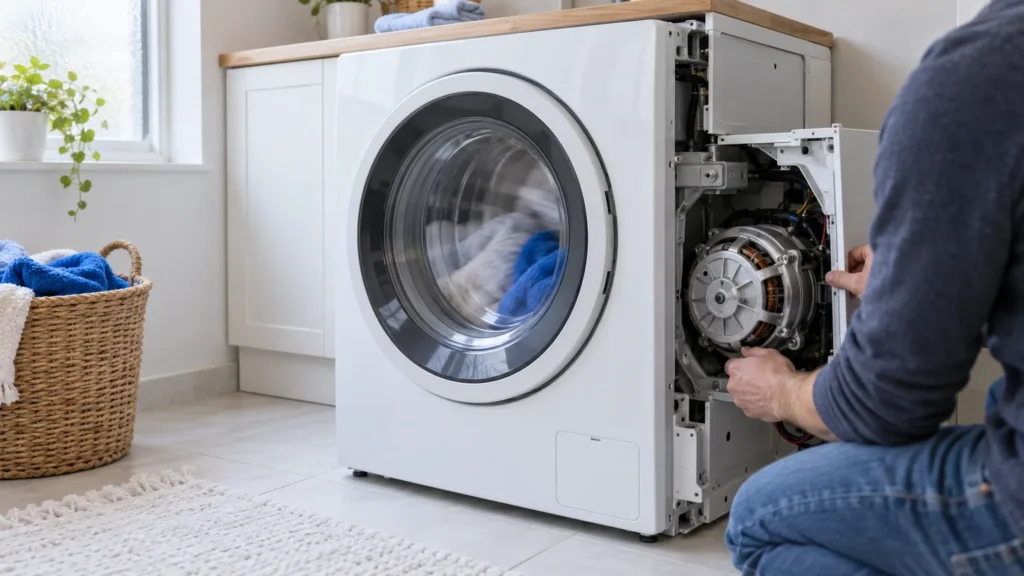
Is the washing machine with an induction motor really quiet when water, the drum and vibrations still generate noise? You will find the criteria to consider in the buying guide below.
Prices collected from retailers are for guidance only: they may have changed since, the current price is the one shown by the retailer. No price is shown for models sold only on Amazon. Amounts converted from reference prices in euros using a dated exchange rate.
Key strength: washing capacity, rated 9.3/10.
Read the review
Top-ranked for drum volume.
Read the review
Key strength: spin speed, rated 8.8/10.
Read the review| Rankings | Rating | Price | Washing capacity | Drying capacity | Dimensions: width | Dimensions: depth | Dimensions: height | Spin speed | Noise level when spinning | Drum volume | Repairability index | Durability index |
|---|---|---|---|---|---|---|---|---|---|---|---|---|
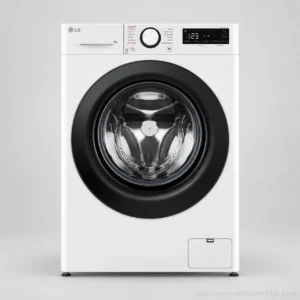
| 1. Beko B3WFT51243W | 9/10 | $540 | 12 kg | n/a | 60 centimeters | n/a | 84.5 centimeters | 1400 rpm | n/a | 75 liters | 8.9 out of 10 | 8.8 out of 10 |
| 2. Vedette LFVQ124W | 8.6/10 | n/a | 12 kg | n/a | 59.5 centimeters | n/a | 85 centimeters | 1400 rpm | 78 decibels | 76 liters | n/a | n/a |
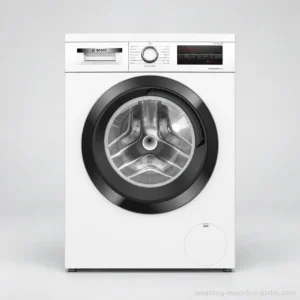
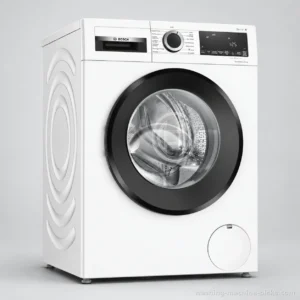
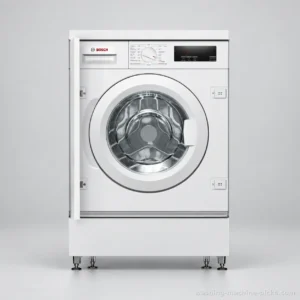
| 3. Bosch WGG244F1FR | 8.5/10 | $688 | 9 kg | n/a | 59.8 centimeters | 63.2 centimeters | 84.5 centimeters | 1400 rpm | 71 decibels | 65 liters | 9.2 out of 10 | n/a |
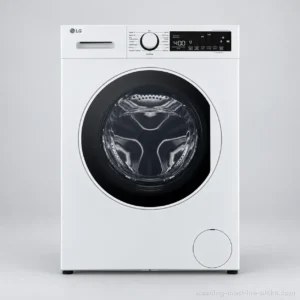
| 4. LG F94R35WHS | 8.4/10 | $475 | 9 kg | n/a | 60 centimeters | n/a | 85 centimeters | 1360 rpm | 71 decibels | n/a | 8.6 out of 10 | 9.3 out of 10 |
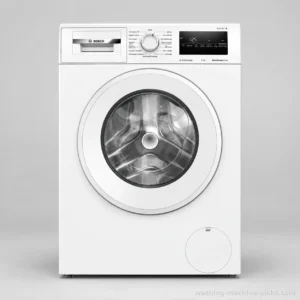
| 5. Bosch WUU28T18FR | 8.3/10 | $559 | 8 kg | n/a | 59.8 centimeters | 63.2 centimeters | 84.5 centimeters | 1400 rpm | 71 decibels | 65 liters | 8.8 out of 10 | n/a |
Rankings are based on our review ratings, calculated by comparing manufacturer specifications across the full catalogue.Our methodology.
Induction motors are now fitted in many mid-range and high-end washing machines. Understanding how they work and what they actually offer helps you avoid buying on the strength of a marketing claim alone.
An induction motor uses a system of permanent magnets to drive the drum directly, without mechanical contact between moving parts. In practical terms, there are no carbon brushes (the small carbon components that rub against the rotor in a conventional brushed motor). This lack of friction fundamentally changes how wear occurs: an induction motor does not rely on parts that wear away over time, but on a magnetic field that drives the drum more directly and consistently.
Fewer mechanical parts in contact means fewer wearing parts to replace. This is why most manufacturers using this technology offer separate motor warranties, often much longer than the standard statutory warranty covering the rest of the appliance. This extended warranty is more than a selling point: it reflects manufacturers' confidence in the system's mechanical durability, since its design leaves fewer components liable to break during operation.
In a conventional washing machine, much of the noise comes from the carbon brushes rubbing against the rotor, particularly during washing and especially during high-speed spinning. By eliminating this mechanical contact, an induction motor reduces a known source of noise and vibration. This does not make the machine completely silent: noise from the water, drum and cabinet vibrations remains. But as far as the motor itself is concerned, the reduction in noise is real and particularly noticeable during spinning.
Several mainstream manufacturers have made induction motors a key selling point of their mid-range and high-end ranges, often linking them to claims about longevity and quiet operation. They now feature in a substantial proportion of models above entry level, making them a common selection criterion rather than a feature reserved for the premium end of the market. This positioning naturally means a slightly higher budget than for a budget washing machine with a conventional motor, without necessarily placing it at the most expensive end of the market.
In practical terms, this type of motor suits anyone who keeps their washing machine for several years and prioritises long-term reliability over purchase price alone. The selection below lets you compare models equipped with this technology by capacity, noise level and the warranties stated by manufacturers.
The induction motor is worth considering for the machine's lifespan and ease of use. Here are the criteria that make a real difference when choosing.
Capacity in kg has a much greater impact on everyday convenience than motor technology. A person living alone or a couple can generally manage with a smaller-capacity machine, while a large family or frequent washing (sportswear, young children's clothes) calls for a higher capacity. An induction motor that is undersized for the actual load wears out faster, because it regularly runs under excessive strain.
Spin speed, expressed in revolutions per minute, directly affects how much moisture remains in the laundry and therefore how long it takes to dry. Spinning is also the most demanding phase for the motor, as it requires rapid, sustained acceleration. An induction motor handles high spin speeds better than a brushed motor, thanks to the absence of mechanical friction between parts. A high speed is useful if you want to reduce tumble dryer use, but it creates more vibration: check that the chassis and drum mounting are designed to absorb it.
This criterion is often overlooked, even though it determines the real value of the purchase. A long motor warranty (several years, sometimes advertised as up to 10 years by some manufacturers) does not mean the entire machine is covered for that long.
Always ask for the exact warranty period stated by the manufacturer and precisely what it covers before comparing 2 models.
The absence of carbon brushes in an induction motor eliminates a source of mechanical noise, but does not make the machine quiet on its own. Noise levels also depend on drum insulation, the chassis and how the machine is secured to the floor. Always distinguish washing noise from spinning noise: high-speed spinning causes the most disturbance, particularly in homes where living areas are close to the utility room or kitchen.
An induction motor is generally more compact than an equivalent brushed motor, which can allow more space inside the drum or reduce the machine's depth. Check the manufacturer's exact dimensions against your available space (freestanding, built-in, under a worktop) before relying solely on capacity in kg.
| Criterion | What to look for | Common mistake |
|---|---|---|
| Wash capacity | Suited to the actual household size and washing frequency | Choosing a standard capacity without considering actual use |
| Spin speed | Suited to the need for quick drying, while checking the machine's stability | Focusing on the maximum figure without checking the stated vibration levels |
| Motor warranty | Clearly stated duration and scope of coverage | Confusing the motor warranty with the warranty for the entire machine |
| Noise level | Separate decibel figures for washing and spinning, provided by the manufacturer | Relying on the word “quiet” without supporting figures |
| Space requirements | Dimensions compatible with the intended installation space | Checking only the capacity in kg without checking the dimensions |
An induction motor is a real asset for the longevity and quiet operation of a washing machine, but you still need to compare the usual criteria. Choose a capacity that suits your household, check the spin speed against the machine's stability, read the exact terms of the motor warranty, and compare noise levels during both washing and spinning. This technology is generally found in the mid-range and high-end washing machine market, with a clear step up in budget compared with a budget washing machine fitted with a conventional motor. The investment is most worthwhile if you use the machine heavily or want a machine that will last for several years.
A brushed motor uses carbon brushes that rub against the rotor to transmit electricity, creating a contact point that wears over time. An induction motor operates without brushes or direct mechanical friction: a magnetic field drives the rotor. This means fewer moving parts subject to wear and generally quieter operation.
Removing the carbon brushes eliminates a common cause of failure in conventional motors, which explains this technology's reputation for reliability. That does not make the machine invincible: other components (pump, electronics, tub bearings) remain subject to normal wear. The motor's reliability does not guarantee the reliability of the entire washing machine.
There is no universal figure that applies to every model, as lifespan depends on use and maintenance. Manufacturers often offer extended motor warranties precisely because they consider this technology more durable, sometimes lasting considerably longer than the standard warranty for the rest of the appliance. The manufacturer's warranty period remains the most useful concrete benchmark to check before buying.
An induction motor is more electrically efficient than a conventional brushed motor because it loses less energy through friction. It therefore contributes to the machine's overall energy efficiency, but actual consumption depends mainly on the selected programme, washing temperature and drum insulation. You should therefore check the full energy label, rather than just the motor type.
Yes, an induction motor can be repaired or replaced like any other electromechanical component, generally by a qualified technician rather than as a routine repair. Failures remain rare with this technology, but when they occur, coverage depends on the manufacturer's motor warranty terms, which often cover the part and sometimes the associated labour.
Several major manufacturers use this technology and advertise long motor warranties, but that does not mean coverage is identical across brands. The main differences concern what is actually included: parts only or labour as well, and any requirements for domestic use. Comparing the detailed terms is more useful than comparing the advertised warranty periods.
This technology is mainly found in mid-range and high-end models, placing it generally above the most basic entry-level models. This difference in positioning also reflects other features often included in these ranges, such as more programmes or better sound insulation, rather than the motor alone.
No, this extended warranty specifically covers the motor, rather than the entire washing machine. The rest of the appliance (electronics, tub, pump, door) remains covered by the standard statutory warranty, which is generally shorter. It is therefore essential to read the precise terms before buying to understand exactly what is included and what is excluded.