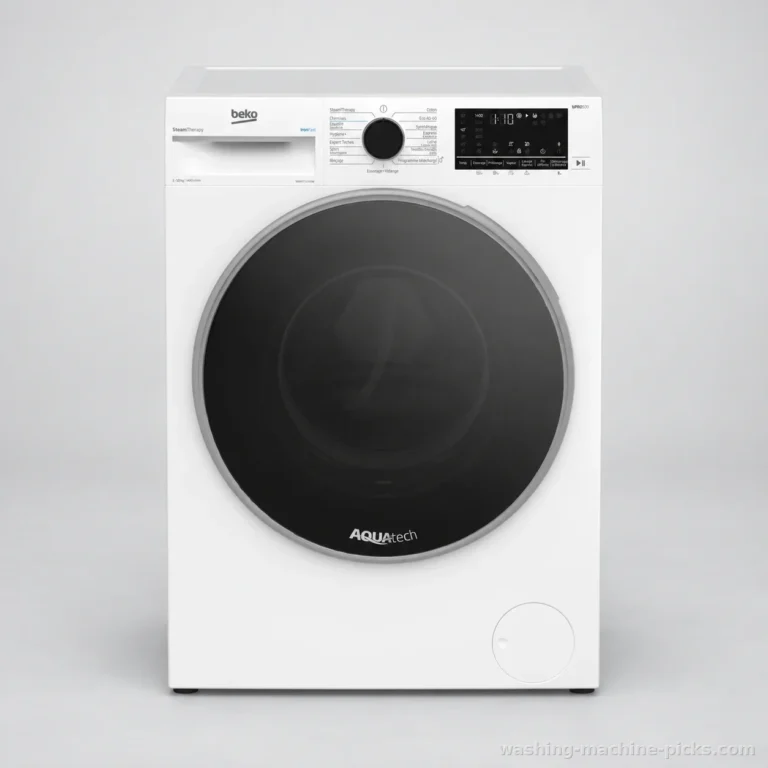
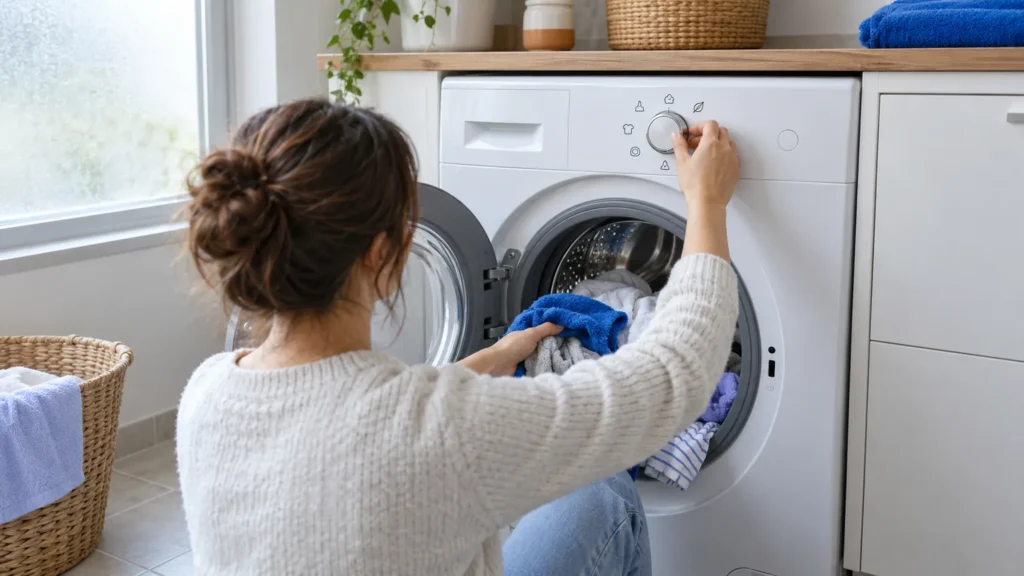
Best washing machine with automatic program 2026, top picks and comparison
When laundry loads pile up, a washing machine with an automatic programme can reduce manual adjustments. Check what it actually adjusts, though, as cycle adaptation and detergent dosing are different functions.
Prices collected from retailers are for guidance only: they may have changed since, the current price is the one shown by the retailer. No price is shown for models sold only on Amazon. Amounts converted from reference prices in euros using a dated exchange rate.
Why these models are listed here
- 2 models selected because they have the feature “Automatic program” according to data published by manufacturers and retailers.
- See how we rate →
- No brand pays to be included in this selection or to rank higher.
What does a washing machine with an automatic programme actually do?
What does an automatic programme really mean
The best washing machine with an automatic programme is one whose settings suit your laundry habits. The aim is to reduce manual adjustments, while keeping the cycle suitable for the load. But the term “automatic” can refer to different functions. You therefore need to check what each appliance actually adjusts before choosing.
To understand this category, distinguish between 3 mechanisms that are not interchangeable:
- An automatic wash programme can adapt certain cycle parameters, depending on the functions described in the manual.
- Load detection concerns the amount of laundry and the adjustments the appliance can make based on this information.
- Automatic detergent dosing controls the dispensing of detergent. Its presence does not mean that the machine also selects the other settings.
The deciding factor is therefore what the automation actually does. An automatic washing machine does not necessarily remove the need to select the fabric type, sort colours or check care labels. Likewise, a connected washing machine does not necessarily have a programme that adapts the wash: connectivity and automation serve different needs.
Why automate everyday settings
Do you regularly hesitate between several programmes? A suitable automatic function can simplify this step by reducing the number of settings you need to choose. The intended benefit is practical: starting a wash with less uncertainty, without having to understand every option for each load.
This assistance can also make it easier to share chores. When several people use the same machine, understandable controls and clearly explained operation make it easier to follow the same routines. Simple controls then matter as much as the list of functions.
Keep your expectations realistic, however. An automatic wash setting alone does not demonstrate lower water and electricity consumption or better stain removal. These benefits need to be documented separately. A washing machine with a delayed finish serves a different need: scheduling your laundry. This function can complement automation without replacing it.
Which households can benefit from this function
This type of washing machine is worth considering if your laundry loads are similar and you want to reduce repetitive adjustments. It may also appeal to households where users have different levels of familiarity with the programmes. The aim is to make everyday choices easier.
Conversely, if you frequently switch between delicate fabrics, heavily soiled clothes and laundry with specific care instructions, pay particular attention to the programme’s limitations. Automation should never lead you to ignore the care precautions for each garment.
- For regular laundry loads, look for operation that is easy to understand and suits your usual laundry.
- For varied needs, check the dedicated programmes and the settings that remain available.
- For a shared machine, prioritise readable information and clear choices.
The selection on this page lets you continue comparing the Whirlpool FFBS9469WVFR with the Samsung WW11BB744DGW. To choose between them, start with your needs, then check the documented features of each model: inclusion in the selection alone does not establish that they offer the same automatic functions.
How do you choose a washing machine with an automatic programme?
To choose the best washing machine with an automatic programme, first check what the appliance actually adjusts, then compare its capacity, consumption and installation requirements. The term “automatic” alone is not enough to distinguish between models. The right choice depends on the settings you want to simplify and the laundry you wash regularly.
How to check the functions of the shortlisted models
Load detection, cycle adjustment and automatic detergent dosing are different functions. The presence of any of these does not confirm the others. Check the manual for the settings that are actually adjusted and the programmes concerned, rather than relying solely on the marketing name.
The Whirlpool FFBS9469WVFR and Samsung WW11BB744DGW are the models to compare in this selection. Their automatic functions are not confirmed here by detailed technical specifications. It would therefore be premature to recommend either model over the other on this basis.
- Check whether automatic adjustment covers water, duration, detergent or several settings.
- Identify the compatible fabrics and load limits for the programme concerned.
- Check which settings you still need to adjust before starting each wash.
A connected washing machine does not, by that designation alone, demonstrate that it adjusts the wash automatically. Compare the functions described, not the marketing labels.
What capacity and dimensions should you choose
Start with your usual laundry loads. Distinguish everyday laundry from bulky items you want to wash at home. A large capacity is mainly useful if your habits allow you to make use of it. It does not guarantee that every programme accepts the stated maximum load.
Before shortlisting a model, measure the available space, doorways and the clearance needed to open the appliance. Also check the clearances required in the installation manual and allow access to the connections.
If space is limited, compare this selection with a compact washing machine. This will help you balance the available space against the amount of laundry you need to wash, without making the automatic programme your only criterion.
How to compare consumption and cycle duration
The energy label allows you to compare appliances on a common basis. Examine the electricity consumption, water consumption and duration associated with the reference programme. Also check the capacity to which these figures apply.
The label figures do not cover every programme. They therefore cannot directly predict the consumption of an automatic cycle. The presence of sensors or adaptive settings is not enough to demonstrate savings either.
To decide, weigh these indicators against your routine. If you run consecutive washes within a short period, look for documented durations for the programmes you will actually use. If consumption is your priority, compare appliances using the same reference programme.
| Criterion | What to look for | Common mistake |
|---|---|---|
| Automation | Adjustments clearly described in the manual | Confusing cycle adjustment with detergent dosing |
| Capacity | A drum capacity suited to your usual laundry loads | Focusing only on the maximum load |
| Consumption | A comparison using the same reference programme | Applying the figures to all cycles |
| Ease of use | Clear controls and easy maintenance | Overlooking where the appliance will be installed |
| Product tier | Useful, documented features | Assuming a higher tier means better automation |
Which ease-of-use and maintenance criteria should you prioritise
If the machine will be near a living area, pay particular attention to the stated spin noise level. Compare this figure in the appliance documentation without confusing it with noise levels throughout the wash cycle.
Next, assess how easy the controls are to read and how many steps it takes to start your usual programme. If several people use the machine, prioritise clearly explained operation. Finally, consult the manual to identify which parts need cleaning, how accessible they are and the recommended maintenance frequency. Check spare parts availability before buying.
How to compare product tiers without paying for an unnecessary feature
Compare entry-level, mid-range and high-end models based on their documented features. A higher positioning does not guarantee automation better suited to your needs. Make a list of essential features, then identify the options you would only use occasionally.
A washing machine with a steam function may be worth including in your comparison if that option meets an identified need. However, it does not replace checking the automatic programme. Without verified market benchmarks, no numerical range can reliably distinguish the product tiers here.
Mistakes to avoid
- Assuming an automatic programme removes the need to sort laundry and follow fabric care labels.
- Assuming an appliance has a feature because a similar model offers it.
- Choosing a capacity without checking programme-specific limits.
- Overlooking dimensions, door opening and maintenance access.
- Paying for options you see no use for in your usual laundry routine.
Key takeaways
Prioritise documented automation suited to your laundry habits. Then compare appliances by usable capacity, installation requirements, comparable consumption figures and maintenance. For the selected Whirlpool and Samsung models, the manuals still need to be checked before making any recommendation based on their automatic functions.
What should you know before starting an automatic programme?
Can you wash wool or silk on an automatic programme?
Yes, but only if the manual allows these fabrics on this programme and their care labels permit machine washing. An automatic programme is no substitute for a programme designed for delicate fabrics. Do not assume that the appliance recognises wool or silk and adjusts all its settings accordingly. If the instructions remain unclear, choose the programme specifically designed for the fabric concerned and follow the garment’s care instructions.
Can you mix whites and colours in an automatic cycle?
It is best to separate whites from colours that may bleed, even on an automatic programme. Adjusting the settings does not guarantee that colour transfer will be prevented. Also sort garments by their permitted washing temperature and how delicate they are. For a mixed load, every item must be suitable for the selected cycle’s conditions. Wash new garments or those with uncertain colourfastness separately, following their care instructions.
Is an automatic programme suitable for heavily stained laundry?
Not always, as an automatic programme does not guarantee that every stain will be removed. Its usefulness depends on the adjustments the appliance actually supports and the type of soiling. A stain in a specific area may need pretreatment suitable for the fabric. Then check the manual to choose the appropriate programme for heavily soiled laundry. Increasing the amount of detergent beyond the recommended dose is not a solution and can make rinsing more difficult.
Can you change the temperature or spin speed after the programme has started?
This depends on the model and how far the cycle has progressed. Some settings may be locked after the programme starts or become impossible to change once the relevant phase has begun. Check the manual before interrupting the wash, then follow the specified pause or cancellation procedure. Check the new settings before restarting the programme. Automatic wash adjustment alone does not mean these changes are possible.
Can you add a garment during an automatic programme?
Yes, if the appliance supports this feature and safety conditions allow the door to open. The water level, temperature and progress of the cycle may prevent you from adding items. Never force a locked door open. Follow the procedure described in the manual and check that the added garment is suitable for the programme in progress. A connected washing machine does not necessarily allow you to add items: connectivity and opening the door during a wash are separate features.
What should you do if laundry is still poorly rinsed after an automatic cycle?
First check the detergent dose and how full the drum is, then run an extra rinse if the manual allows it. An overpacked load or too much detergent can make rinsing less effective. If the problem recurs, check the accessible maintenance components, following the manufacturer’s instructions. Even with automatic detergent dosing, check the settings and the product used. Persistent residue warrants a diagnosis by the after-sales service team.
What happens to the automatic programme after a power cut?
What happens after a power cut depends on the appliance: check its manual to find out how the cycle resumes. When power returns, check the display to see whether the programme resumes, requires an action or needs to be restarted. Do not assume the wash is finished because the machine has stopped. A delayed finish feature on a washing machine does not indicate whether it can remember the cycle after a power interruption.