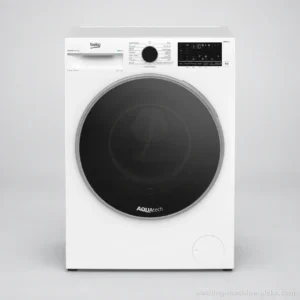
Beko B3WFT51243W
Key strength: washing capacity, rated 9.3/10.
Read the review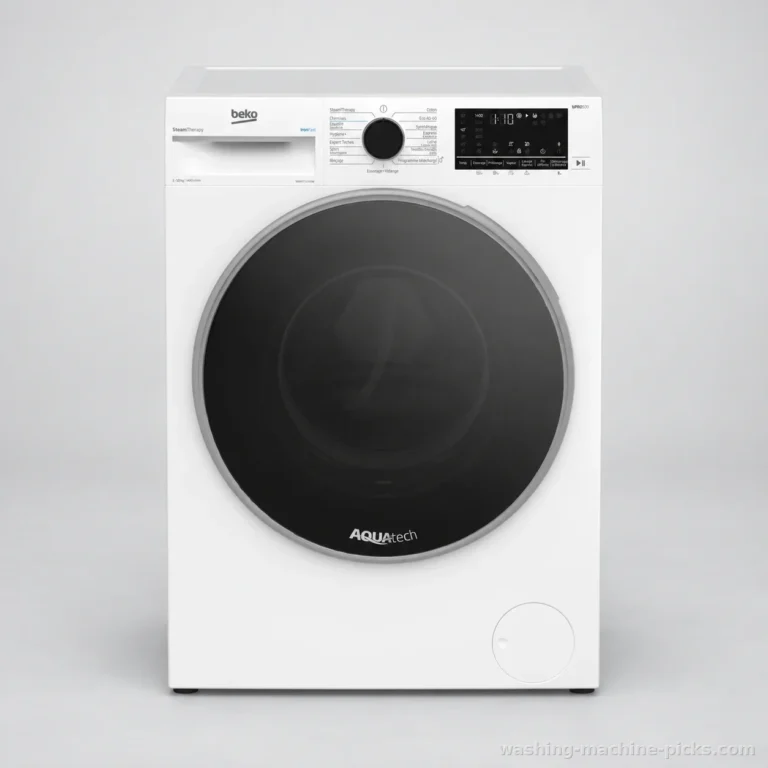 Our rankingsThe best washing machines24 washing machines
By installation
By color
By features
Features and options
By brand
Our guides to choosing
Prices in USD are indicative: they are converted from the reference catalogue prices in euros at a fixed rate (EUR 1 = $1.08, 9 Sep 2026) and are not prices from a local retailer. The price at your retailer prevails. (28 Sep 2026 – 30 Sep 2026)
How to buy a budget washing machine without compromising on laundry essentials? Our selection helps you compare capacity, dimensions and documented consumption figures to suit your needs.
Prices collected from retailers are for guidance only: they may have changed since, the current price is the one shown by the retailer. No price is shown for models sold only on Amazon. Amounts converted from reference prices in euros using a dated exchange rate.
Key strength: washing capacity, rated 9.3/10.
Read the review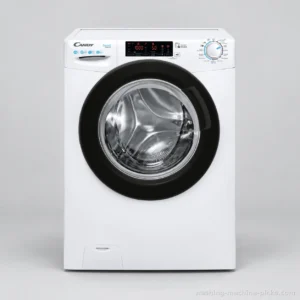
Top-ranked for washing capacity and drum volume.
Read the review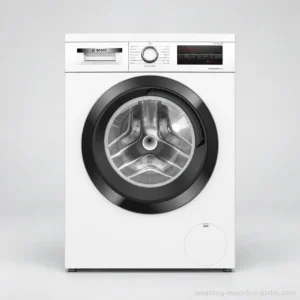
Key strength: spin speed, rated 8.8/10.
Read the review| Rankings | Rating | Price | Washing capacity | Drying capacity | Dimensions: width | Dimensions: depth | Dimensions: height | Spin speed | Noise level when spinning | Drum volume | Repairability index | Durability index |
|---|---|---|---|---|---|---|---|---|---|---|---|---|
| 1. Beko B3WFT51243W | 9/10 | $540 | 12 kg | n/a | 60 centimeters | n/a | 84.5 centimeters | 1400 rpm | n/a | 75 liters | 8.9 out of 10 | 8.8 out of 10 |
| 2. Candy CSS1414TWMBE | 8.4/10 | $580 | 14 kg | n/a | 60 centimeters | n/a | 85 centimeters | 1400 rpm | 80 decibels | 83 liters | 7.8 out of 10 | 7 out of 10 |
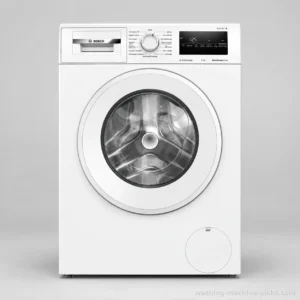
| 3. Bosch WUU28T18FR | 8.3/10 | $559 | 8 kg | n/a | 59.8 centimeters | 63.2 centimeters | 84.5 centimeters | 1400 rpm | 71 decibels | 65 liters | 8.8 out of 10 | n/a |
| 4. Bosch WAN24209FR | 8.2/10 | $556 | 9 kg | n/a | 59.8 centimeters | 63.3 centimeters | 84.5 centimeters | 1200 rpm | 71 decibels | 65 liters | 9.1 out of 10 | n/a |
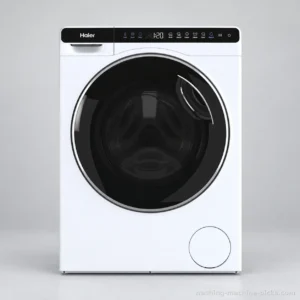
| 5. Haier HW50-BP12307-S | 7.4/10 | $571 | 5 kg | n/a | 51 centimeters | 49.2 centimeters | 70 centimeters | 1200 rpm | 66 decibels | 32 liters | n/a | n/a |
Rankings are based on our review ratings, calculated by comparing manufacturer specifications across the full catalogue.Our methodology.
The best budget washing machine is the one that meets your needs without making you pay for unnecessary features. For a small home, prioritise compact dimensions. For large loads, look at capacity. To keep running costs under control, compare documented consumption figures rather than marketing promises.
An affordable washing machine is suitable both as a first appliance and as a replacement. The right balance depends on your usual laundry, the space available and how you dry your clothes. No model automatically offers the best combination for every household.
An analysis of their specifications shows that these models have different strengths. The table helps you identify your priority before considering the associated trade-off.
| Model | Key specifications | What to watch out for |
|---|---|---|
| Haier HW50-BP12307-S | 5 kg, width of 51 cm, height of 70 cm | Depth to be confirmed |
| Bosch WUU28T18FR | 8 kg, 1 400 rpm, removable lid | Check compatibility with the space beneath the worktop |
| Bosch WGG244FSFR | 9 kg, 49 kWh per 100 cycles, 50 l per cycle | 228 min eco programme |
| Whirlpool FFDB11469BVFR | 11 kg, 71 l drum, up to 1 400 rpm | Match capacity to the amount of laundry you actually wash |
When choosing between entry-level and mid-range models, look first for a suitable capacity and useful features. A remaining time display or a delay end function can help you plan. Steam and connectivity should carry less weight if you do not intend to use them.
Also compare the overall cost of the appliance. Water consumption, electricity, delivery and installation matter just as much as market positioning. Check the following conditions in particular:
Our selection is based on a documentary analysis of specifications and retailer descriptions. We distinguish technical data from marketing claims. These are not enough to establish long-term reliability or claim widespread satisfaction without verifiable user feedback.
Contradictions remain visible. Have these details confirmed before buying.
Browse the selection on this page with your main constraint in mind, then compare each model’s compromises to choose the one that truly suits your daily needs.
The best budget washing machine is one that suits your laundry needs, fits in your home and has verifiable consumption figures. When choosing, prioritise usable capacity, actual dimensions and running costs over extra features.
| Model | Listed price | Capacity | Spin speed | Washing capacity | Noise level |
|---|---|---|---|---|---|
| LG F82AV35WHS | Check price with the retailer | 8 kilograms | 1200 rpm | 8 kg | Not available |
| Candy CSS1410TWMRE-47 | Check price with the retailer | 10 kilograms | Not available | Not available | Not available |
| Bosch WUU28T18FR | Check price with the retailer | 8 kilograms | 1.400 rpm | 8,00 Kg | 71dB(A) |
| Haier HW50-BP12307-S | Check price with the retailer | 5 kilograms | 1.200 rpm | 5,00 Kg | 66dB(A) |
| Whirlpool FFDB11469BVFR | Check price with the retailer | N/A | N/A | N/A | N/A |
| Candy CSS1414TWMBE | Check price with the retailer | N/A | 1400 rpm | N/A | 52 dB |
| Bosch WGG244FSFR | Check price with the retailer | N/A | N/A | 9 kg | 71 dB |
| Samsung WW11DG6B85LK | Check price with the retailer | 11 kilograms | 1.400 rpm | 11kg | 72dB(A) |
| Whirlpool FFBS9469WVFR | Check price with the retailer | 9 kilograms | 1400 rpm | 9 Kg | 78dB(A) |
Start with your laundry habits rather than just the number of people in your household. Frequent small loads call for a different machine from large loads of sheets and towels. Look at what actually fills your laundry basket before choosing.
Stated capacities range from 5 kg for the Haier HW50-BP12307-S to 14 kg for the Candy CSS1414TWMBE. This range caters to different needs. A large capacity is unnecessary if you struggle to gather enough laundry suitable for the same programme.
Also distinguish between washing capacity and drum volume. The Bosch WUU28T18FR combines 8 kg with 63 l, while the Whirlpool FFDB11469BVFR lists 11 kg and 71 l. For a bulky item, check the recommendations in the manual rather than relying solely on kilograms.
Measure the available width, height and depth. Also check doorways, clearance for opening the drum door and access to connections.
A compact washing machine can help where space is limited, but its dimensions need to be confirmed. Ask for the overall depth, including protruding parts, before confirming where it will go.
Do not confuse fitting under a worktop with integrated installation. The Bosch WUU28T18FR has a removable top and a stated height of 82 cm without it. This alone does not make it an integrated washing machine that can accommodate a decorative front panel. Check the installation requirements in the manual.
Consider the energy rating, electricity consumption, water use and reference programme duration together. A letter alone reflects neither your habits nor the appliance's full consumption.
The Bosch WGG244FSFR provides detailed figures with an A rating, 49 kWh per 100 cycles, 50 l per cycle and an eco programme lasting 228 min. Check that this duration fits your routine. These figures do not establish consumption for other programmes.
Ask for an up-to-date energy label when the information differs. Do not compare these letters directly without clarifying which label applies to the model being sold.
Consider spin performance in relation to how you dry your laundry. If you have limited space for air drying, pay particular attention to this criterion. The stated speeds of 1 200 and 1 400 rpm provide reference points, but are not enough to establish how much moisture remains.
Also check the spin efficiency rating where available. The Bosch WGG244FSFR and Whirlpool FFBS9469WVFR have a B rating. Check which settings are suitable for your usual fabrics rather than always seeking the highest speed.
For noise, compare the same operating phase. The Haier HW50-BP12307-S lists 66 dB during spinning, compared with 71 dB for the Bosch WUU28T18FR. This figure deserves attention if the appliance will be near a living area. The 52 dB stated for the Candy CSS1414TWMBE does not specify the operating phase, so it cannot support a like-for-like comparison.
Start with programmes suited to your clothes, then check the remaining time display and scheduling options. Distinguish between delayed start, which postpones the start, and delayed finish, which targets a finishing time.
Check the manual for the load limits of short and specialist programmes. The stated maximum capacity does not tell you the capacity of every cycle.
A washing machine with a steam function is worth considering if its described uses match your needs. Connectivity is a secondary consideration if you plan to use only the appliance’s controls. A technology’s trade name alone does not demonstrate better washing performance.
When comparing entry-level and mid-range models, consider what the difference offers for your needs. Compare delivery, installation, old appliance collection and warranty terms. In particular, check whether delivery stops at the building entrance or includes taking the appliance to its intended location.
The Whirlpool FFBS9469WVFR is listed as refurbished. Before choosing this offer, ask about the appliance’s exact condition, the checks performed and the return terms. For any purchase, check spare parts availability and who handles after-sales service.
Start by choosing an appliance suited to your laundry and your home. Then compare its documented consumption figures and terms of sale. Contradictory specifications need clarification before purchase, especially when they concern dimensions or the energy label.
No brand can be called the most reliable based on technical specifications alone. Reliability needs to be assessed model by model, using verifiable information about breakdowns and repairs. When choosing, pay particular attention to spare parts availability, warranty terms and access to after-sales service. A motor described as robust or a long list of features is not enough to establish how long the appliance will last.
No brand should be ruled out without reliable evidence about its models and after-sales service. Be more cautious about poorly documented models or sellers who do not explain repair terms. Contradictory specifications call for verification, rather than a verdict on the brand. Have this information confirmed before ordering.
Our selection does not allow us to recommend a top-loading washing machine for reliability, as the models analysed are front-loading. If a top-loading design suits your home better, look into the specific model, spare parts availability and repair terms. Also check the clearance required above the appliance. The loading design addresses a space constraint; on its own, it is not evidence of reliability.
On a very limited budget, prioritise a capacity that suits your laundry loads, useful programmes and clear service terms. The best budget washing machine also depends on your home and how you dry your laundry. Compare the total purchase cost, including delivery, installation and any collection of your old appliance. Connectivity or steam features can be secondary if you do not use them. A refurbished option is also worth considering when its condition and warranty are clearly specified.
A refurbished washing machine can be a good deal if its condition, the checks carried out and the warranty terms are clearly documented. The Whirlpool FFBS9469WVFR, for example, appears in a listing described as refurbished. Before buying, ask which parts have been replaced, which faults remain and how returns work. Also check who handles breakdowns and any transport required. The word “refurbished” alone does not describe exactly what work has been done on the appliance.
Compare electricity consumption, water consumption and the reference programme, rather than relying on the energy rating alone. The Bosch WGG244FSFR lists 49 kWh per 100 cycles, 50 l per cycle and a duration of 228 min for the eco programme. These figures help you assess the stated consumption and the time required. Ask for an up-to-date energy label if conflicting information appears. How often you wash also matters when assessing running costs.
Choose the capacity based on how much laundry actually builds up between washes, rather than relying solely on the number of people in your household. The Haier HW50-BP12307-S offers 5 kg in a compact washing machine format, while the Bosch WUU28T18FR offers 8 kg and the Whirlpool FFDB11469BVFR 11 kg. A large capacity is only useful if you regularly need it. Also check the manual for the permitted loads on your usual programmes, as the maximum capacity does not necessarily apply to every programme.
Prioritise 1 400 tr/min if spinning is an important part of your laundry routine, but also compare spin efficiency ratings and settings suited to your fabrics. Maximum speed alone is not enough to distinguish between appliances. The Haier HW50-BP12307-S lists 1 200 tr/min and 66 dB during spinning, compared with 1 400 tr/min and 71 dB for the Bosch WUU28T18FR. These specifications illustrate a trade-off between speed and noise worth considering, without establishing the amount of residual moisture on their own.